Fertulity IVF
Fertulity IVF

In Vitro Fertilisation (IVF) in Greece with High Success Rates

What is In Vitro Fertilisation (IVF)?

In Vitro Fertilization (IVF) is the most widely used and effective method of assisted reproduction. As its name indicates, it is the process in which the fertilization of the egg by the sperm occurs outside the body under laboratory conditions, rather than in the woman’s fallopian tubes as in natural conception.

Despite the use of advanced laboratory techniques, the eggs and sperm belong to the couple themselves, and the embryos created are carefully transferred back into the uterus with the aim of achieving implantation and pregnancy.

IVF is commonly recommended in cases of infertility caused by fallopian tube problems, male factor infertility, ovarian dysfunction, or unexplained infertility. Since the birth of the first IVF baby in 1978, the field of assisted reproduction has advanced significantly, offering hope and effective solutions to millions of couples worldwide.

The Stages of In Vitro Fertilisation (IVF)

The journey to pregnancy, step by step
Step 1

Preparation and Fertility Testing

The first stage of the process involves a detailed medical examination and discussion with the doctor to understand the couple's history and identify any potential obstacles to fertility. Blood tests, transvaginal ultrasound, semen analysis and hormone markers are performed to develop a personalised IVF plan. At the same time, instructions are given on dietary and lifestyle changes that increase the chances of success. A strong body before conception is the first step to a healthy pregnancy.
Tiny newborn feet and hands, symbolizing the joyful outcome of a successful IVF journey.
Step 2

Ovarian Stimulation & Egg Retrieval

Once the preparation phase is completed, ovarian stimulation begins with the daily administration of fertility medications for approximately 9–12 days, in order to stimulate the development of multiple ovarian follicles. During this phase, the patient undergoes frequent ultrasound examinations and blood tests to monitor the response of the ovaries and the growth of the follicles. When the follicles reach the appropriate size, egg retrieval (oocyte retrieval) is scheduled. Egg retrieval is a short procedure lasting only a few minutes, during which the eggs are collected from the ovaries under light sedation. The retrieved eggs are then fertilized in the laboratory using sperm from the partner or a donor.
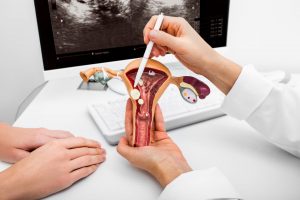
Doctor and patient discuss IVF using a uterine model during a consultation with ultrasound screen visible.
Step 3

Embryo transfer & waiting

The fertilised eggs are monitored by specialist embryologists as they develop for 3 to 5 days. The best embryo is then selected for transfer to the uterus — a simple and painless procedure that does not require anaesthesia. The remaining healthy embryos can be cryopreserved for future use. After embryo transfer, the waiting period begins, and approximately 10-12 days later, a pregnancy test is performed by testing for beta-hCG in the blood.
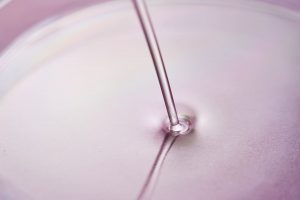
Micropipette precisely injects fluid into a petri dish during the critical IVF laboratory procedure.

In Vitro Fertilisation Methods

The choice of the most appropriate IVF method is always made on an individualized basis, taking into account the medical evaluation and the specific needs of each patient. The main IVF approaches include the natural cycle, the modified natural cycle, mild ovarian stimulation, and conventional (full) ovarian stimulation. Each approach has its own characteristics, advantages, and limitations.
1

In Vitro Fertilisation in the Natural Cycle

In a natural IVF cycle, no ovarian stimulation medications are used, except for a single trigger injection administered shortly before egg retrieval to induce final oocyte maturation. The process follows the natural development of a single follicle, from which one egg is collected and fertilized in the laboratory.

This method is less invasive and lower in cost, but it is associated with lower success rates and a higher risk of not obtaining a viable embryo. It is typically recommended for women with diminished ovarian reserve or for those who prefer a more natural approach to fertility treatment.
2

Modified Natural Cycle

This approach is based on the natural development of a single follicle, but it is supported by low doses of medication to prevent premature ovulation.

As a result, the simplicity of the natural cycle is maintained while significantly reducing the risk of cycle cancellation. It is considered a safer alternative for women with limited ovarian reserve or for those who prefer minimal medical intervention.
3

Mild stimulation

In mild ovarian stimulation, lower doses of fertility medications are used for a shorter duration compared to conventional IVF protocols, aiming to produce a small number of high-quality follicles.

This approach offers good success rates while reducing the risk of ovarian hyperstimulation syndrome (OHSS). It represents a balanced option, combining better outcomes than the natural cycle with less medication burden than full stimulation.
4

Conventional (Full) Ovarian Stimulation IVF

This is the most commonly used IVF approach, in which the patient receives higher doses of gonadotropins in order to stimulate the development of multiple follicles.

It offers the highest success rates per cycle and is often considered the preferred option when the goal is to maximize the number of eggs retrieved. Although it involves higher medication use and increased treatment cost, it may reduce the need for repeated treatment cycles.

Advanced IVF Techniques

For even greater precision and improved outcomes, IVF can be combined with specialized advanced techniques, depending on the needs of each couple.

IVF & Micromanipulation Techniques (PICSI / IMSI)

Used depending on sperm quality, enabling more precise sperm selection during fertilization.

Assisted Hatching / Embryo Glue

Techniques that facilitate embryo implantation in the uterine lining.

EmbryoScope & Blastocyst Culture

Advanced embryo monitoring systems that allow the selection of the strongest embryos for transfer.

Cryopreservation

Embryos can be safely frozen for use in a future treatment cycle.

PGD / PGT (Preimplantation Genetic Diagnosis)

Genetic screening of embryos to detect hereditary or chromosomal disorders before embryo transfer.

Testicular Biopsy  (Micro-TESE / TESA / PESA)

Used in men with azoospermia or very poor sperm quality, allowing sperm retrieval directly from the testes.

What does the cost of IVF include?

In vitro fertilization (IVF) is a complex medical process, and its cost is not identical for every patient. Instead, each treatment plan is individually designed based on the couple’s specific needs and medical indications. For this reason, it is important to understand what the overall pricing may include in order to make a well-informed decision.

The total cost may include ovarian stimulation, egg retrieval, fertilization (IVF or ICSI), embryo transfer, blastocyst culture, as well as the use of specialized techniques such as PICSI or EmbryoGlue. Additional options may also be available, including egg freezing or embryo cryopreservation.


Prices may vary depending on the treatment protocol selected, such as a natural cycle, full ovarian stimulation, or egg donation, as well as the specific laboratory techniques required during treatment.
Talk to an Expert

Frequently Asked Questions About IVF

What are the basic stages of IVF?

The process includes: ovarian stimulation with medication, egg retrieval (oocyte retrieval), fertilisation in the laboratory (IVF or ICSI), embryo culture and finally embryo transfer to the uterus. The entire process takes approximately 2–3 weeks.

How many IVF attempts are needed on average to be successful?

The success rate depends on several factors, including the woman’s age, the quality of the eggs and sperm, and the couple’s fertility history. In many cases, pregnancy is achieved within 1–3 IVF cycles.

What is the cost of a complete IVF treatment?

The cost can start at ~3,500 and reach or exceed 5,500, depending on whether egg donation, cryopreservation or special techniques are required. 

Does the IVF process hurt?

The process is basically painless. Egg retrieval is performed under mild anaesthesia and takes about 15-30 minutes. The injections of medication may cause minor discomfort, such as bloating or sensitivity in the abdomen.

What are the success rates by age?

In women under 35, success rates are around 50–70%. After 40, the rates gradually decrease, while egg donation significantly increases the chances regardless of age.

When can I take a pregnancy test after embryo transfer?

The measurement of beta-hCG is usually performed 10–12 days after embryo transfer, with a blood test. Home pregnancy tests are not recommended before this time.

Our Doctors

In an era where fertility requires knowledge, care, and substantial guidance, FertUlity is not an impersonal clinic. It is two people who look you in the eye and accompany you step by step on the journey you dream of.

Dr. Maria Oikonomou Obstetrician – Gynecologist

See Full CV

Dr. Chrysostomos (Makis) Papadopoulos Obstetrician – Gynecologist, MD, PhDc, MIC I

See Full CV

The First Step Starts Now

You don’t need to have all the answers to begin.
All it takes is one first step, and a team that truly listens.
Book Your Consultation

FertulityThrough the Words of Parents

100% genuine, public Google reviews.
Because every fertility journey begins with honesty and trust.

Why choose FertUlity?

Because every fertility journey deserves the right support.

At FertUlity, we provide science-based fertility care with a human approach.
We support every path, from fertility assessment and preservation to modern assisted reproduction.

Ready for the next step?

Contact Form

Learn More About IVF & Fertility

Knowledge brings confidence. At FertUlity, we share evidence-based information so you can make the right decisions about your fertility.
crossmenu