Many women trying to conceive are faced with the unexpected diagnosis of fibroids, without knowing how significantly they can affect their fertility. Fibroids, especially when located inside the endometrial cavity, can block embryo implantation or cause miscarriages. Timely diagnosis and targeted fibroid removal before IVF significantly increase success rates and offers many women the opportunity to have a child.
Fibroids, also known as myomas or leiomyomas, are benign tumors that develop in the muscular wall of the uterus. They are one of the most common conditions of the female reproductive system, with occurrence rates reaching up to 70% of women before menopause. Although non-cancerous, they can significantly affect quality of life and fertility, depending on their size, number, and location within the uterus.
Types of Fibroids
Fibroids are classified mainly based on their location in relation to the uterine wall and cavity
Submucosal fibroids
Develop just beneath the inner lining of the uterus (endometrium) and protrude into the endometrial cavity. Although usually smaller in size, they have the greatest impact on fertility as they can distort the uterine cavity, affect embryo implantation, and cause bleeding or miscarriage. Hysteroscopic removal is the treatment of choice for these fibroids.
Intramural fibroids
Located within the muscular wall of the uterus and are the most common. Depending on their size, they can cause menstrual disorders, pain, and pressure symptoms. When larger than 3 centimeters or when they alter the anatomy of the endometrial cavity, they may negatively affect fertility and the success of treatments such as IVF.
Subserosal fibroids
These fibroids develop on the outer surface of the uterus, projecting into the peritoneal cavity. They usually do not directly affect fertility unless they grow very large and exert mechanical pressure on the fallopian tubes or nearby organs. Their removal is mainly suggested when they cause symptoms or interfere with the functionality of the reproductive organs.
Proper identification of the type and location of fibroids is a fundamental step for the appropriate therapeutic approach, especially when there is a goal of childbear
How do they affect fertility?
The presence of fibroids can affect a woman's fertility in various ways, primarily depending on the location, size, and number of tumors. Not all fibroids impact conception or IVF success the same way. However, when fibroids alter the normal anatomy of the uterus or block embryo implantation, the chances of conception are significantly reduced.
Fibroid location and fertility
Fibroid size and number
Statistics and implantation failure risks
The location of fibroids is perhaps the most important factor regarding their impact on fertility:
Submucosal fibroids
Cause temporary menopause and fibroid shrinkage but are not suaHave the most negative impact. Even small ones can distort the endometrial cavity and block embryo implantation, reducing the success rates of both natural conception and IVF. Their removal via hysteroscopy significantly improves outcomes.itable for long-term use due to side effects.
Intramural fibroids
When larger than 3–4 cm or located near the endometrial cavity, they can also negatively affect fertility by causing an inflammatory microenvironment, changes in blood flow, or mechanical pressure.
Subserosal fibroids
Rarely associated with fertility issues, unless they become large and obstruct fallopian tube movement or press against adjacent organs.
Size also plays an important role
Fibroids over 4–5 cm, even if not submucosal, may alter the endometrium or uterine contractions, affecting embryo receptivity. Additionally, the presence of multiple fibroids increases the likelihood of disrupting the uterus' morphology and creating a non-conducive environment for conception.
Research data has shown that:
Women with submucosal fibroids have up to 70% lower implantation rates in IVF cycles compared to women without fibroids.
Removal of fibroids, particularly submucosal or large intramural ones, can double the chances of successful implantation.
In cases of multiple or large fibroids, pregnancy chances are significantly reduced, even after repeated IVF attempts.
Each case must be evaluated individually, based on medical history, age, fibroid characteristics, and the woman's reproductive plan. Collaboration with a fertility specialist can determine the best strategy for managing fibroids and optimizing pregnancy chances.
Fibroids often cause no obvious symptoms, especially when small. However, in many cases, they can significantly impact a woman’s daily life and become a barrier to childbearing. Timely recognition of symptoms is crucial for diagnosis and appropriate therapeutic intervention.
Common fibroid symptoms
Prolonged and/or heavy menstrual bleeding (menorrhagia)
Intermenstrual bleeding
Severe menstrual pain (dysmenorrhea)
Pressure or heaviness in the pelvis or bladder
Frequent urination or incomplete bladder emptying sensation
Constipation or intestinal discomfort
Pain during intercourse (dyspareunia)
Difficulty conceiving or delayed pregnancy
Recurrent miscarriages or implantation failures in IVF
It is worth noting that symptom severity is not always related to fibroid size. Even small lesions can cause serious problems when located in critical areas within the uterus.
When to consult a specialist
If you notice any of the above symptoms or if you have been trying to conceive unsuccessfully for more than 6 months, it is important to be evaluated by a gynecologist specialized in fertility. Timely diagnosis and a personalized therapeutic approach can improve pregnancy rates and prevent complications.
Accurate fibroid diagnosis is a key step in planning the right treatment approach, especially when pregnancy is the goal. The choice of diagnostic method depends on symptom type, fibroid location, and the woman's reproductive planning.
The most reliable diagnostic techniques include:
Ultrasound
Transvaginal ultrasound is the first-line method for fibroid diagnosis. It is non-invasive, readily available, and provides valuable information about the size, morphology, and location of fibroids in relation to the uterine cavity. In some cases, saline infusion sonography (sonohysterography) is also used to better assess the endometrial cavity and identify possible submucosal fibroids.
Hysteroscopy
Hysteroscopy is an endoscopic method that allows direct visualization of the endometrial cavity through a thin optical tube inserted through the cervix. It is the most accurate method for identifying and evaluating submucosal fibroids, offering a 3D view of the uterine interior. It can be diagnostic and therapeutic if fibroid removal is possible during the same session.
MRI (Magnetic Resonance Imaging)
MRI is mainly used in complex or multiple fibroid cases when detailed uterine anatomical mapping is needed before surgery. It offers excellent precision in determining fibroid location, depth of infiltration, and relationship with surrounding organs. It is particularly useful for women planning IVF or close to reproductive age and requiring full uterine preservation.
Choosing the appropriate diagnostic approach is always based on each woman’s individual needs and history. Proper diagnosis lays the foundation for successful, personalized treatment.
Treatment Options
Treatment for fibroids depends on various factors such as size, location, number, age, presence of symptoms, and future pregnancy plans. Available options range from conservative medication to advanced uterus-preserving surgical techniques.
Medication & hormonal management
Drug treatment aims to reduce symptoms and fibroid size, mainly in women not planning pregnancy soon.
It includes:
GnRH agonists
Cause temporary menopause and fibroid shrinkage but are not suitable for long-term use due to side effects.
Combined contraceptive pills
Help control bleeding but do not significantly reduce fibroid size.
Levonorgestrel-releasing IUDs (e.g., Mirena)
Reduce blood loss.
New agents (e.g., ulipristal acetate)
Used under strict medical supervision, mainly as pre-surgical preparation.
Medical management is not a definitive solution and is usually recommended as pre-surgical preparation or for women near menopause.
Hysteroscopic myomectomy (day-clinic)
Hysteroscopic myomectomy is the most appropriate method for removing submucosal fibroids that distort the endometrial cavity. The procedure is incision-free, using a camera inserted through the cervix, and shows excellent results for women with fertility issues.
Laparoscopic / Robotic myomectomy
Laparoscopic myomectomy is used for deeper or larger fibroids. It is a minimally invasive procedure where fibroids are removed through small abdominal incisions guided by a camera. Robotic myomectomy is an advanced version offering more precision and stability, especially in complex cases with multiple or hard-to-reach fibroids. Both techniques minimize recovery time and preserve uterine fertility.
Uterine artery embolization (UAE) – Pros & Cons
UAE is a non-surgical technique where fibroid blood supply is cut off by injecting microscopic beads into uterine arteries, causing fibroid necrosis and shrinkage.
Advantages
No general anesthesia required
Short hospital stay
No surgical incision
Disadvantages
Not suitable for women desiring pregnancy, as it may affect endometrial blood flow
Risk of recurrence
Possible complications like pelvic pain and inflammation
This method is mainly suggested for women who do not plan future pregnancies or have contraindications for surgery.
Selecting the most suitable treatment is always based on individualized evaluation by specialized medical personnel, with a focus on preserving fertility and uterine health.
Fibroids & IVF (In Vitro Fertilization)
The presence of fibroids is a common concern for women preparing for IVF. Although not all fibroids affect the process equally, certain types — especially those that distort the endometrial cavity — may significantly reduce implantation and pregnancy chances. Proper evaluation and removal where necessary before IVF are critical for optimizing outcomes.
When removal is recommended before IVF
The decision to remove fibroids before an IVF cycle mainly depends on their location and characteristics. Surgery is generally recommended in these cases:
Submucosal fibroids
Even small, as they distort the endometrial cavity and hinder embryo implantation.
Intramural fibroids
Larger than 3–4 cm, especially if they affect the cavity geometry or cause symptoms.
Multiple fibroids
That cause increased inflammation or disrupt uterine blood flow.
Fibroids
Associated with implantation failures or recurrent miscarriage, even after successful embryo transfer.
The decision is always personalized, in collaboration with a fertility gynecologist, considering the number and quality of embryos, the woman’s age, and her reproductive history.
Success rates after surgery
Studies show that removing submucosal fibroids via hysteroscopic myomectomy can increase implantation rates by 30–70%, depending on the woman’s age and IVF cycle parameters. Likewise, removing large intramural fibroids laparoscopically or robotically has been linked with higher clinical pregnancy rates, especially after previous failed attempts. The endometrium regains normal shape and improved blood flow, making the environment more receptive to implantation.
Overall, proper fibroid management before IVF does not guarantee success, but may double pregnancy chances in selected cases, providing better conditions for embryo implantation and development.
Yes, the increase in estrogen and progesterone during pregnancy can accelerate fibroid growth, especially in the first trimester. In some cases, they may cause pain or complications, though most pregnancies proceed normally.
Can I have a vaginal delivery with fibroids?
In many cases, yes. It depends on the fibroid’s location and size. If they are near the cervix or obstruct fetal descent, a C-section may be recommended for safety.
Do fibroids recur after removal?
Unfortunately, there is a chance of recurrence, especially in women not close to menopause. The risk depends on age, fibroid type, and hormonal influences.
Is IVF possible without fibroid removal?
In some cases, yes – especially when fibroids are small, peripheral, and don’t distort the endometrial cavity. The doctor carefully assesses if removal is necessary.
Are there natural remedies to shrink fibroids?
So far, no scientifically proven natural therapies reduce fibroid size or number. Diet and lifestyle may help regulate hormones but do not replace medical intervention.
Does menopause “eliminate” fibroids?
With declining estrogen in menopause, most fibroids stop growing and gradually shrink. However, this isn’t always the case, and some women continue to have symptoms.
Do fibroids increase cancer risk?
No. Fibroids are benign tumors and rarely become cancerous. The so-called leiomyosarcoma is extremely rare and does not develop from pre-existing fibroids.
Are there exercise restrictions with fibroids?
Usually not. Most women can continue exercising unless fibroids cause pain or bleeding. Light exercise may help regulate hormones and promote well-being.
Our Doctors
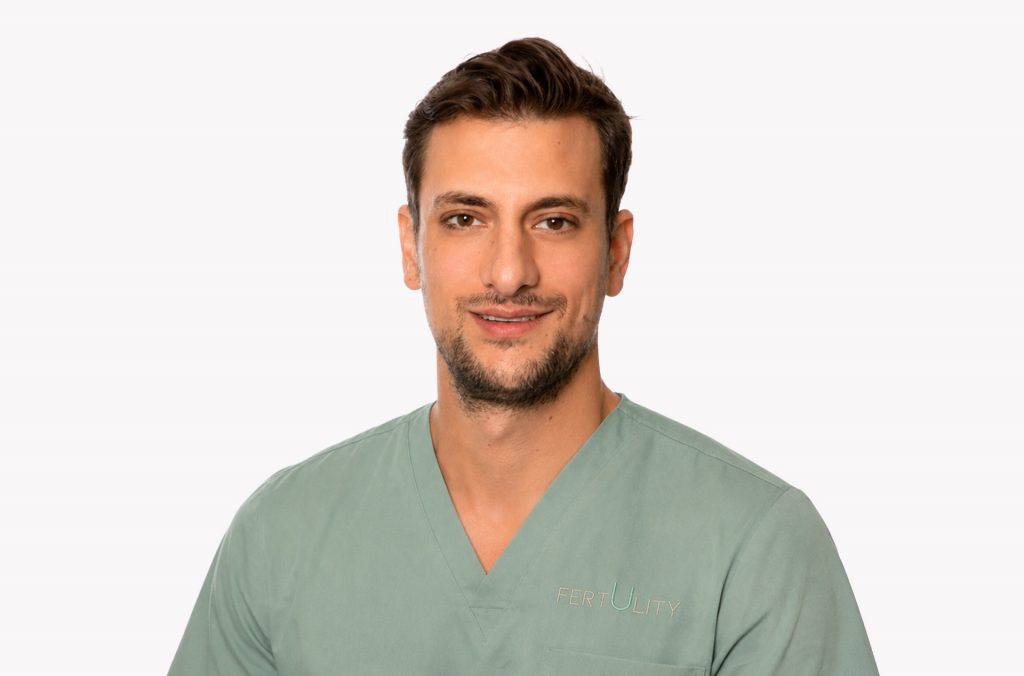
In an era where fertility requires knowledge, care, and substantial guidance, FertUlity is not an impersonal clinic. It is two people who look you in the eye and accompany you step by step on the journey you dream of.
Dr. Chrysostomos (Makis) Papadopoulos Obstetrician – Gynecologist, MD, PhDc, MIC I
100% genuine, public Google reviews. Because every fertility journey begins with honesty and trust.
Posted on Google
Μαρια
26 days ago
The word "thank you" to Dr. Makis Papadopoulos is too small to describe the gratitude we feel for this man. I am pregnant after IVF, having succeeded on the first attempt, and we owe this exclusively to our doctor. First Contact & Communication: From the very first contact, he won us over with his kindness, enthusiasm and willingness to dedicate as much time as we needed. Willing to explain everything in every detail, he solved every question we had in depth — not even a professor to students would analyze them with such patience and contagiousness! Scientific Training: He is an excellent scientist, with deep knowledge of the subject, a perfectionist and focused professional who leaves absolutely nothing to chance. He designed the right treatment for us, solving every problem down to the last detail, making us feel that whatever problem arises, it is certain that it will be solved. HUMANITY & SUPPORT: The most important thing, however, is his humanity. Communication with him was Immediate and he always had as much time as you needed on the phone to solve every question. He showed a deep, real interest, embracing us not just as a doctor, but as if he were our brother. We highly recommend him to every couple starting this journey. He deserves blind trust! We thank you from the bottom of our hearts for the greatest miracle of our lives!
I don't often write reviews, but I feel that Mr. Makis truly deserves it. From the very first moment, he made me feel safe and confident. He listened carefully to what was on my mind, answered every question I had, and explained everything in a simple way, always based on scientific data. Many times, he even sent me relevant scientific studies so that I could better understand why he was suggesting a particular approach. But what stood out to me the most was that he didn't stop at the appointment. He followed up, was genuinely interested in my progress, and was available when I needed him. This is something you rarely encounter. Fortunately, he returned to Greece. He is one of the few doctors who, beyond their knowledge, remain above all human beings. He makes you feel like he sees you as a person and not as just another incident.
A big thank you to Dr. Makis Papadopoulos who supported us from day one, who checked every little detail, who explained to us every move-step, every test, every medication for the reason we were doing it and what we would achieve. With incredible experience, knowledge, a lot of patience (because we had two other failed attempts with another doctor) and trust, within 8 months he adapted the protocols for our case and we achieved the positive result and we hold in our arms a priceless diamond. Above all, a rare person, calm and always available to listen to our concerns and reassure us. I highly recommend him!
Thanks to Dr Makis Papadopoulos, I am now holding my two beautiful babies in my arms! He is a true expert. Professional with a human centric approach, friendly and empathetic, always available to answer our (many many) questions. I trust Dr Makis blindly and, honestly, I cannot recommend him enough!
Posted on Google
Ivy
100 days ago
My experience with Dr. Makis took me from a clinical stagnation to an incredible breakthrough, highly recommend Dr. Makis! Navigating the exhausting world of IVF, you know how devastating it is to watch your protocol dosages go up while your results go down. After three intense, high-dosage cycles with a previous clinic, I was left feeling incredibly discouraged. Despite escalating medications and growth hormones, my blastocyst yield was dwindling, culminating in a heartbreaking round with zero blastocysts. I knew I needed a doctor who didn't just follow a standard script, but who truly understood the nuances of egg quality and customized protocols. That is when I found Dr. Makis. Dr. Makis completely revolutionized my treatment plan. Instead of just pushing maximum dosages, he took a highly strategic, tailored approach. The result? Quality over pure protocol size. While my previous doctors kept increasing the medication dosages (which yielded fewer or zero blastocysts), Dr. Makis completely changed the strategy. He lowered the heavy stimulation, introduced smart egg-quality support (like melatonin), changed the protocol style entirely, and achieved a 700% increase in blastocysts compared to my best previous rounds. Beyond the incredible results, Dr. Makis brings a level of expertise, precision, and reassuring care that is rare to find. He looks at you as an individual, not a statistic, and knows exactly how to pivot when traditional routes fail. If you are looking for a specialist who can turn a difficult prognosis into an overwhelming success, look no further than Dr. Makis. I am incredibly grateful for his care.
Posted on Google
Olga
111 days ago
Dr. Makis Papadopoulos was excellent, professional, and very reassuring throughout the entire process. Thanks to his expertise and guidance, we were able to identify the issue early and take the appropriate steps from the beginning. He took the time to explain everything clearly, answered all our questions with patience, and made us feel comfortable and confident throughout our journey. We truly appreciated his caring approach, professionalism, and dedication. Highly recommended!
Posted on Google
Euaggelia
122 days ago
Dr. Makis Papadopoulos is an excellent scientist and above all a rare person! He is an approachable and smiling doctor, with excellent medical knowledge, who from the first moment I met him made me feel comfortable and trust him completely, answering every question I had with patience and documenting every answer with scientific studies and articles! The most important thing, however, is that Dr. Makis Papadopoulos is always there on the other end of the line to listen to you and reassure you without a trace of haste, a doctor who truly cares and makes you feel like he is your own person! Makis, thank you very much for everything!!! I am very lucky to have met you!
Dr. Makis Papadopoulos is an excellent scientist with a human-centered interest. Our collaboration was excellent from the very beginning and he made me feel confident and secure by explaining every step of the process in great detail. I highly recommend him!
Dr Makis Papadopoulos is very professional, caring and attentive. Very thorough in explaining the whole process throughout every step. Thank you! Highly recommended!!
Posted on Google
Christina
134 days ago
I would like to share my experience with Dr. Makis Papadopoulos, an outstanding gynecologist and scientist. We first connected in the summer of 2024, while he was based in Germany, through a mutual acquaintance, following a particularly challenging period for us. Prior to meeting him, we had gone through repeated unsuccessful attempts of stimulation and fertilization with other gynecologists. Unfortunately, those approaches relied largely on standardized protocols, without sufficient personalization to address the specific needs of my case. From the very beginning, Dr. Makis stood out for his human-centered approach and his willingness to dedicate time to truly understand our situation in depth. With strong, up-to-date scientific knowledge, he approaches every case holistically, focusing on individualized treatment and adapting protocols to the patient's unique needs. Throughout our collaboration, which now spans approximately two years (with a few breaks on our side), he has consistently been available, supportive, and clear in his guidance. He inspired confidence and helped us stay positive even during difficult phases of the journey. Beyond his scientific expertise, what truly sets him apart is his genuine care for the person behind each case: his empathy, honesty, and continuous effort to achieve the best possible outcome. My husband and I are deeply grateful for his support and guidance, and we now feel ready and optimistic to move forward to the next final stage. We highly recommend him to anyone seeking a gynecologist with true expertise, professionalism, and compassion. I would like to share my experience with Dr. Makis Papadopoulos, an excellent gynecologist and scientist. We met in the summer of 2024, when he was in Germany, through a mutual acquaintance, after a particularly demanding period for us. Before meeting him, we had gone through repeated failed attempts at stimulation and fertilization with other gynecologists. Unfortunately, the approaches that had been followed were mainly based on standardized protocols, without the necessary individualization to the specifics of my case. From the beginning, Dr. Makis stood out for his human approach and his willingness to spend time to understand our case in depth. With modern knowledge and scientific training, he approaches each issue multidimensionally, emphasizing the individualization of treatment and adapting the protocols to the real needs of the patient. During our collaboration, which now spans about two years (with short breaks on our part), he was always available, supportive and clear in his guidance. He inspired confidence in us and helped us remain optimistic even in difficult phases. In addition to his scientific competence, what sets him apart is his genuine interest in the person behind each case: his empathy, his honesty and his constant effort to achieve the best possible outcome. My husband and I thank him warmly for his support and guidance and we now feel ready and optimistic to move on to the next final stage. We highly recommend him to anyone looking for a gynecologist with real knowledge, professionalism and humanity.
Dr. Makis Papadopoulos is an excellent gynecologist and above all an excellent person! I truly thank him for his support and care during the egg freezing process. Although my case was particularly demanding, he stood by me with patience, knowledge, great experience and real interest. Our communication was direct and human, while his availability at the many appointments made me feel safe at every step. The protocols were designed specifically for me, aiming for the best possible result, while also taking into account the cost of the medications. I recommend him with all my heart to every woman who wants to trust someone for something so important and sensitive for her.
I highly recommend Dr. Makis, he is an incredible specialist. My journey was far from easy, encountering several challenges that made the process feel overwhelming at times. What sets him apart is his willingness to go beyond standard procedures. He developed a specialized, custom protocol, tailored to my situation, which ultimately made all the difference. Beyond his technical expertise, his calm and clear communication kept me grounded throughout the process. I am so grateful for his persistence and high level of care!
Why choose FertUlity?
Because every fertility journey deserves the right support. At FertUlity, we provide science-based fertility care with a human approach. We support every path, from fertility assessment and preservation to modern assisted reproduction.
Ready for the next step?
Learn More About IVF & Fertility
Knowledge brings confidence. At FertUlity, we share evidence-based information so you can make the right decisions about your fertility.