Fertulity IVF
Fertulity IVF

Embryo Freezing The Modern Choice for Fertility Control

What Is Embryo Freezing?

The decision to start a family is not always aligned with the immediate conditions that allow for pregnancy. Modern medicine offers solutions that respect each couple’s timing and individual needs. Embryo freezing is one of the most reliable fertility preservation methods, allowing couples to plan pregnancy at the most suitable stage of their lives. In the era of personalized care and technological advancement, embryo cryopreservation combines scientific precision with emotional reassurance, offering a stable foundation for building a future family.

Embryo freezing has become an integral part of modern assisted reproduction, offering significant advantages to couples who wish to safeguard their fertility for the future. As technology continues to evolve, an increasing number of children are born from cryopreserved embryos, highlighting both the safety and effectiveness of the method. The ability to store embryos for future use provides couples with the flexibility to plan pregnancy according to their personal and medical circumstances, without compromising implantation success rates.

In certain IVF (in vitro fertilization) cycles, more embryos are created than those selected for immediate transfer to the uterus. With the use of advanced time-lapse incubators and strictly controlled culture conditions, high-quality embryos can be developed. In addition, the use of artificial intelligence enhances the process by enabling precise embryo ranking based on implantation potential. Surplus embryos that are not transferred are frozen at the blastocyst stage using the vitrification method, ensuring very high survival and success rates in future cycles.

How the Embryo Freezing Process Works

The embryo freezing process begins with a crucial step: the couple’s informed consent. Before any stage proceeds, specialized consent forms must be signed, clearly outlining key aspects such as where the embryos will be stored, the duration of storage (typically up to 10 years), what happens after the storage period expires, and how the embryos will be managed in cases where no decision can be made or in the event of death.

Additionally, it is determined whether the embryos will be used exclusively for your own fertility treatment or whether they may be allocated for research purposes or donated to other infertile couples. This stage is essential, as it ensures legal, medical, and ethical clarity before the embryo cryopreservation process begins.

Embryo Freezing: Who Is It For?

Embryo freezing is a targeted solution for couples who wish to secure their chances of building a family in the future. In cases where more embryos are produced during an IVF (in vitro fertilization) cycle, surplus embryos can be cryopreserved for future use—either to achieve a second pregnancy or as a backup option in case the first cycle is unsuccessful. This approach allows couples to plan their family journey with greater ease and less stress, while maintaining stable success rates.

Application in Preimplantation Genetic Testing (PGT)

Embryo freezing is also essential in cases involving preimplantation genetic testing (PGT), as embryos are kept frozen until the genetic analysis is completed. This period is used to extract valuable information that allows for the selection of embryos free from genetic abnormalities or hereditary conditions. In this way, embryo freezing actively supports the genetic safety of the future child, ensuring that embryo transfer is performed only with healthy genetic material.

Fertility Preservation for Patients Undergoing Medical Treatments

Patients who are about to undergo treatments such as chemotherapy, radiation therapy, or surgeries that may affect fertility can rely on embryo freezing to preserve their ability to have children in the future. This preventive strategy offers hope and a practical solution for individuals facing serious health conditions, allowing them to maintain their family planning regardless of disease progression.

Prevention of Ovarian Hyperstimulation Syndrome (OHSS)

Embryo freezing can also be used to prevent ovarian hyperstimulation syndrome (OHSS), a serious complication of IVF treatment. By adopting a “freeze-all” strategy, immediate embryo transfer is avoided, allowing the body to recover naturally and reducing the risk of complications. This approach enhances both patient safety and the overall success of the treatment.

Embryo Freezing in Cases of Elevated Hormone Levels

Embryo freezing is also recommended for women with elevated progesterone levels during an IVF cycle, particularly when levels exceed 1.5 ng/ml on the day of the ovulation trigger injection (trigger day). This hormonal imbalance may reduce implantation rates by up to 20%, making embryo freezing the safest and most effective option. Delaying embryo transfer and performing it in a future, hormonally balanced cycle significantly increases the chances of a successful pregnancy.
Do You Fall Into One of These Categories?
Fill Out the Assessment Form & Discover Your Options
Contact Form

Advantages of Embryo Freezing

Embryo freezing offers a series of meaningful advantages that boost both IVF effectiveness and safety. One of the most important benefits is the reduced need for repeated ovarian stimulation cycles. When there are surplus high-quality embryos, multiple embryo transfers can be performed without new medications. This means less physical and financial strain on the woman, as additional injections, tests, and procedures are avoided, while pregnancy success rates increase.

Improved Endometrial Receptivity and Medical Safety

Another key advantage of embryo freezing is the ability to transfer them in a later cycle when the endometrium is more naturally prepared. Research shows that the absence of hormonal stimulation leads to improved endometrial receptivity and higher implantation rates. This approach is especially useful when high levels of estradiol or progesterone are observed in the fresh cycle, as these can negatively affect the outcome. Postponing the embryo transfer to a more stable cycle enhances clinical effectiveness and provides additional safety for the woman.
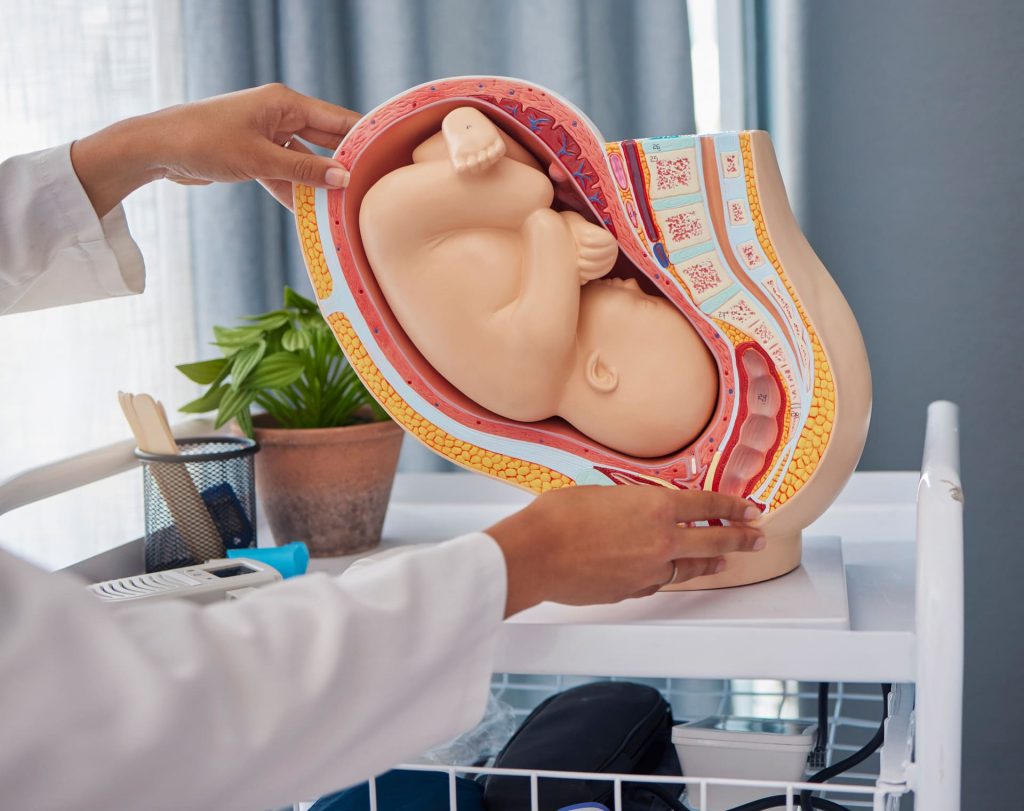
IVF pregnancy anatomy model showing fetal development inside uterus, used during patient education for clear visualization and understanding.

Healthy Pregnancy Outcomes and Child Development

Embryo freezing is a medically proven safe technique, as children born from frozen embryos do not show increased rates of congenital anomalies compared to the general population. Available data confirm that cryopreservation does not negatively affect the child’s future health, reinforcing trust in the technique among parents and professionals. Scientific advancements in vitrification have made the process completely safe and effective, offering long-term solutions without compromising the quality or health of new life.
IVF pregnancy ultrasound review session with patient and specialist, discussing fetal development and confirming healthy progression of pregnancy.

Success Rates of Pregnancies with Frozen Embryos

At FertUlity, we follow a specialized protocol for freezing embryos at the blastocyst stage using advanced vitrification techniques. This method ensures exceptionally high survival rates after thawing — exceeding 95%.

The embryo quality remains unchanged, making the chances of pregnancy comparable to those with fresh embryos. Our data confirm that frozen embryo transfers at FertUlity deliver consistent and reliable results, meeting each couple’s needs with precision and safety.

Embryo cryopreservation is not just an alternative — it’s a strategic choice with high success potential that has helped hundreds of women hold the baby they dreamed of.

The Embryo Transfer Process and Necessary Preparation

Frozen embryo transfer at FertUlity is planned individually to optimize endometrial readiness and achieve pregnancy. The timing of the transfer is based on the so-called “implantation window” — the period during which the endometrium is most receptive.

The woman’s preparation can be done either through a natural cycle by monitoring ovulation or through medication that regulates the cycle and transfer day. In a controlled cycle, taking estrogen pills for 12–14 days helps develop the endometrium properly, which we monitor via ultrasound for thickness and triple-layer texture. Proper uterine preparation is a critical factor for implantation success and subsequent pregnancy.
Your next step is just one appointment away. Book an Informational Appointment with Our Team.
Book an Appointment 

Frequently Asked Questions About Embryo Freezing

At what stage do you usually freeze embryos and why?

We primarily freeze blastocysts, as at this stage (5–7 days post-fertilization), they have higher implantation potential and allow us to select the best-quality embryos before cryopreservation.

What are the survival and pregnancy rates after thawing?

Thanks to vitrification, over 95% of embryos survive intact; pregnancy rates are comparable to those of “fresh” embryos, offering a strong success likelihood for each transfer.

How much does embryo freezing and annual storage cost?

The total cost includes the IVF (in vitro fertilization) procedure, embryo cryopreservation, and annual storage fees. The cost of cryopreservation remains the same for surplus embryos that may result after a fresh embryo transfer.

How long can embryos remain stored?

Based on the consent you sign, embryos are typically stored for up to 10 years in liquid nitrogen at -196°C, preserving their biological age at the time of freezing. In certain medical cases, the storage duration may be extended further, in accordance with applicable legislation.

Are children born from frozen embryos healthy?

Yes. Studies show no statistical difference in congenital anomalies compared to the general population, confirming the method’s long-term safety.

Who benefits most from embryo freezing?

Couples with surplus embryos, patients undergoing PGT, individuals before fertility-impacting treatments (e.g., chemotherapy), and women with high hormone levels or at risk for OHSS.

Is medication needed before embryo transfer?

Depending on your cycle, either a natural protocol with ovulation monitoring is followed, or a controlled cycle with medication lasting approximately 12–14 days, allowing the endometrium to reach the optimal “implantation window.”

What happens if the storage period expires or I change my mind?

Your consent form specifies whether embryos will be destroyed, used for research, or donated to another couple. This ensures your wishes are legally and ethically respected, even if you’re unable to decide in the future.

Our Doctors

In an era where fertility requires knowledge, care, and substantial guidance, FertUlity is not an impersonal clinic. It is two people who look you in the eye and accompany you step by step on the journey you dream of.

Dr. Maria Oikonomou Obstetrician – Gynecologist

See Full CV

Dr. Chrysostomos (Makis) Papadopoulos Obstetrician – Gynecologist, MD, PhDc, MIC I

See Full CV

The First Step Starts Now

You don’t need to have all the answers to begin.
All it takes is one first step, and a team that truly listens.
Book Your Consultation

FertulityThrough the Words of Parents

100% genuine, public Google reviews.
Because every fertility journey begins with honesty and trust.

Why choose FertUlity?

Because every fertility journey deserves the right support.

At FertUlity, we provide science-based fertility care with a human approach.
We support every path, from fertility assessment and preservation to modern assisted reproduction.

Ready for the next step?

Contact Form

Learn More About IVF & Fertility

Knowledge brings confidence. At FertUlity, we share evidence-based information so you can make the right decisions about your fertility.
crossmenu