Fertulity IVF
Fertulity IVF

Egg Donation in Greece  Everything You Need to Know

What is Egg Donation

Egg donation is a significant advancement in the field of assisted reproduction, offering hope to couples who are unable to conceive naturally or through standard IVF methods. It is a process that requires responsibility, scientific guidance, and absolute respect for both the donor and the couple receiving the eggs.

On a social level, the act of egg donation is associated with the concept of giving and support. A woman who chooses to donate eggs gives another individual or couple the chance to experience parenthood — an experience that otherwise would not be possible.
The procedure is anonymous and strictly regulated by Greek law to ensure the safety and ethical balance of all parties involved.

Over the last decade, there has been a steady increase in cases where IVF with egg donation is considered the recommended solution. Couples facing fertility issues due to age, repeated failed attempts, or genetic disorders are increasingly turning to this method.

Although it is a decision often accompanied by psychological and social questions, scientific documentation and high success rates make it one of the most reliable options within the range of reproductive solutions.
Book a Consultation

Why Should I Choose Egg Donation?

Book A consultation

When Eggs Are Not Sufficient

Egg donation is a necessary option for many women who cannot achieve pregnancy with their own eggs. This mainly concerns women who:
Are over 44 years old with depleted egg reserves,
Are in premature menopause or suffer from ovarian insufficiency,
Do not produce eggs at all or produce poor quality eggs,
Carry genetic abnormalities they do not wish to pass on to their child.
The donation process gives these women the opportunity to become mothers, using eggs from young and healthy donors, significantly increasing the success rates.

What Are the Indications for Egg Donation?

The main indication is reduced ovarian reserve, meaning a low number of follicles and poor egg quality. This condition is common either due to age or as a result of medical conditions such as:
Chromosomal abnormalities,
Consequences of chemotherapy or radiation,
Autoimmune diseases affecting ovarian function.
According to data, over 70% of women over the age of 45 who wish to have a child resort to egg donation. Similarly, this option is recommended in cases of repeated IVF failures, as well as when there is a risk of passing on a serious genetic disorder.

Innovation in Practice: The MST Technique

Special mention should be made of the maternal spindle transfer (MST) technique, which offers a solution for women with mitochondrial diseases. The technique is applied as follows:
The nucleus of the future mother’s egg is removed.
It is placed into a donor’s egg from which the nucleus has been removed.
The new egg contains the genetic material of the mother and the healthy cytoplasm of the donor, without the problematic mitochondria.

Advantages & Disadvantages of Egg Donation

What Does Egg Donation Offer?

Egg donation is one of the most effective solutions in assisted reproduction, with clear clinical and psychological benefits.

High Success Rates

Eggs come from young, fertile, and healthy donors.
The chances of successful implantation and pregnancy are significantly increased, even in older women or those with previous IVF failures.

Gestation by the Recipient

The recipient becomes pregnant and carries the child herself.
The embryo develops in her body, ensuring natural hormonal communication and psychological bonding from the start of pregnancy.

Prevention of Genetic Diseases

Donation is chosen when there is a risk of transmitting genetic or mitochondrial diseases.
In cases of mitochondrial diseases, the maternal spindle transfer (MST) technique allows transmission to be avoided while preserving the mother's genetic material.

Medical Safety for the Donor

The procedure follows standard IVF medication protocols.
The donor’s future fertility is not affected.
Risks are minimal and similar to those any woman undergoing egg retrieval would face.

Psychological Issues

The absence of genetic relation may cause dilemmas for the recipient.
Full acceptance of the situation requires internal processing and/or psychological support.

Anonymity & Uncertainty

The donor’s anonymity, as stipulated by Greek law, protects privacy but may leave questions about the origin of the genetic material.

Financial Cost

The procedure may carry a significant financial burden, which includes:
Donor compensation
Medication
Laboratory techniques

Medical Risks

Although rare, side effects may arise from hormone treatment or ovarian hyperstimulation syndrome (OHSS).
Procedures are controlled but require medical monitoring by specialized staff.

Ethical and Social Questions

The use of genetic material from a third party often raises ethical concerns that require sufficient legal and medical guidance to be addressed safely and transparently.

The Right Decision Starts with Information

Egg donation is a medically proven, safe, and effective solution that opens the path to motherhood in cases where other methods fail.
At the same time, it requires a conscious decision based on individualized medical assessment and meaningful psychological preparation.

What You Should Know About the Challenges

Despite the many advantages, egg donation may raise concerns and questions, both emotional and practical.

Are You a Candidate for Egg Donation

Talk to our team and receive scientific guidance and human support.
Book A Consultation

The Step-by-Step Process

Below you will find a complete timeline of all stages from donor selection to final pregnancy testing. The detailed description of each step helps you understand exactly what will happen, when, and why—so you can make decisions confidently and maximize success rates.

Donor Selection & Criteria

The success of an IVF cycle with egg donation starts with proper donor selection. The process is strictly regulated, follows multi-level criteria, and ensures the genetic material comes from women medically and psychologically fit.

Legal Framework in Greece

According to Greek law, egg donation is anonymous and non-compensated beyond expense coverage. Clinics must maintain a donor record and inform the National Authority of Medically Assisted Reproduction for each cycle. Data protection is strict, and the maximum number of births per donor is monitored to avoid overuse of a single genetic profile.

Medical Eligibility Criteria

Donors are usually selected between 20 and 32 years old, an age range that ensures high ovarian reserve and good egg quality. Each candidate undergoes detailed:
Hormonal profiling (FSH, LH, AMH)
Ovarian ultrasound evaluation
General physical assessment
Cardiological and gynecological exams
Excluded are those with histories of endocrine, autoimmune, or severe metabolic diseases, as well as substance users or heavy smokers.

Psychological & Social Assessment

A specialized psychologist conducts an interview to confirm the decision stems from conscious will and not external pressure. Additionally evaluated:
Motivation for donating,
Understanding of anonymity
Emotional stability
Family support
The goal is to safeguard the well-being of both donor and future parents.
Book A Consultation

Matching Process with Recipient

The clinic uses a combination of biological and phenotypic parameters for optimal matching:
Blood type and Rh
Height, weight, eye and hair color
Education level and interests
Recipient’s special requests like language or cultural background
The process is finalized once the recipient approves the suggested profile, always maintaining anonymity.

What Donor Compensation Covers

Compensation is not a “payment” but reimbursement for the expenses and discomfort the donor undergoes. In Greece, the process is regulated by the National Authority of Medically Assisted Reproduction; only expense reimbursement is allowed, preserving the altruistic character of the donation.
Book A Consultation

Legal Framework in Greece

Anonymity of donor and recipient.
Full coverage of stimulation medication, medical tests, travel, accommodation, and any nutrition during the treatment period.
Compensation for lost wages or work leave, when documented.
Birth limit per donor to prevent overuse of a genetic profile.

Typical Compensation Range in Practice

In Greek fertility centers, the total amount usually covers:
€700 – €1,200 for medication and monitoring.
€100 – €400 for travel and accommodation, depending on residence.
Up to €300 for lost income in daily wage workers.
The overall cap is typically below €1,500, maintaining the non-commercial nature of donation.

Success Rates & Influencing Factors

Egg donation offers higher success rates than conventional IVF attempts with "own" eggs, due to the age and fertility of the donors.

Average Success Rates

45-55%

International average clinical pregnancy per embryo transfer

50%

Live birth per embryo transfer in Europe
Rates remain consistently high even when the recipient is aged 44–50, as egg quality is the main limiting factor bypassed by donation.

Egg Donation Frequently Asked Questions about Egg Donation

How much does IVF with egg donation cost in Greece?

The total package usually ranges from €5,500 to €6,000, including lab procedures, ICSI, embryo culture, and embryo transfer.

What exactly does donor compensation cover?

Compensation covers only reasonable expenses: stimulation meds, medical exams, travel, accommodation, and possible lost income. The actual cap rarely exceeds €1,500 per cycle.

What are the success rates for recipients over 45?

With donor eggs under 32 years old, clinics report clinical pregnancy rates of 45–55% and live birth rates around 50%, regardless of recipient’s age.

Is there a genetic relationship (DNA) between recipient and child?

The child’s genetic material comes from the donor (egg) and biological father (sperm). The recipient does not contribute DNA but provides the uterus and gestational environment, which epigenetically influence development.

What’s the average waiting time for egg donation in Greece?

Waiting time usually ranges from 1 to 3 months, depending on the desired donor traits and center availability.

What are the main risks for the recipient?

Most side effects relate to hormonal support (nausea, fluid retention), while the main serious risk is multiple pregnancy if more than two embryos are transferred. In Greece, a maximum of two embryos is allowed.

Can I choose specific characteristics for the donor?

Matching is based on blood group, Rh, and basic phenotypic traits (height, eye/hair color). Greek law does not allow "made-to-order" selection beyond these medically accepted parameters.

What does the law say about anonymity?

Egg donation is fully anonymous. Recipient and donor cannot exchange personal details, and the National Authority tracks births per donor for traceability.

How many embryos can be transferred per cycle?

Regulations set a maximum of two embryos for recipients under 50 to reduce the risk of multiple pregnancy. Elective single blastocyst is recommended when quality is high.

Is the procedure safe for the donor?

The donor follows the same stimulation protocols as women undergoing IVF for their own child. Side effects are rare and include mild ovarian hyperstimulation; compensation covers any recovery costs.

Our Doctors

Their knowledge. Their care. Your confidence.

Dr. Maria Oikonomou Obstetrician – Gynecologist

Specialisation: Infertility & Gynaecological Endocrinology
“My goal is for every woman to feel that she has a voice and support on her journey to motherhood.”
See Full CV

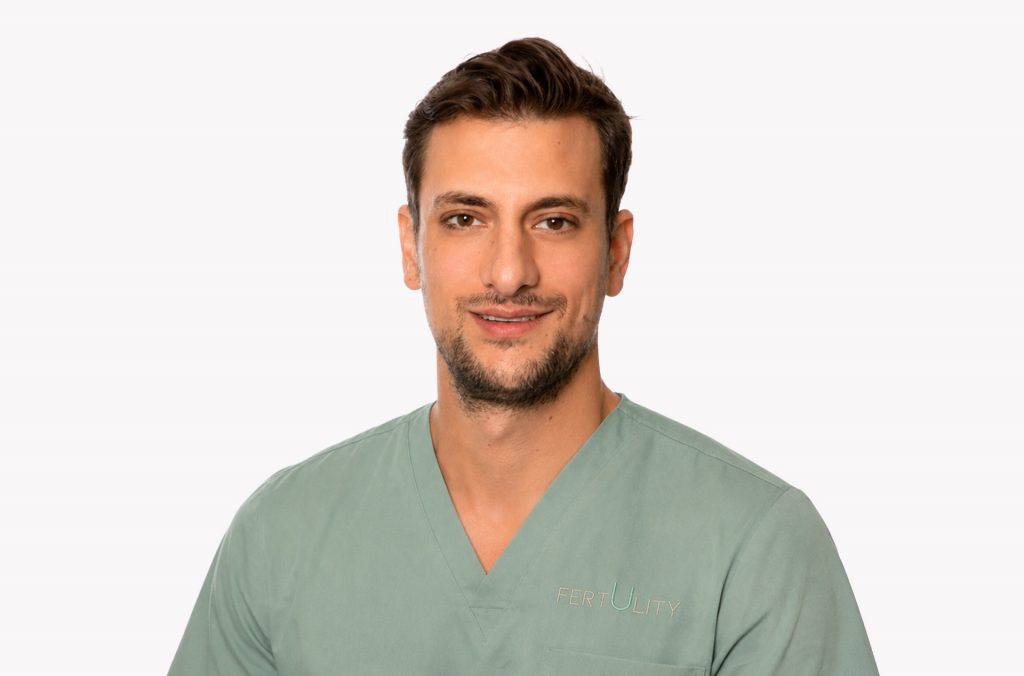
Dr. Chrysostomos (Makis) Papadopoulos Obstetrician – Gynecologist, MD, PhDc, MIC I

Specialisation: IVF & Reproductive Endocrinology
“Science is the foundation. Trust is the key.”
See Full CV

The First Step Starts Now

You don’t need to have all the answers to begin.
All it takes is one first step, and a team that truly listens.
Book Your Consultation

FertulityThrough the Words of Parents

100% genuine, public Google reviews.
Because every successful IVF story begins with honesty and trust.

Why choose FertUlity?

Because here, IVF is not just a medical procedure. It is a personal matter.

At FertUlity, we believe that every couple deserves to feel secure, respected and hopeful. We combine expertise in reproductive medicine, modern IVF techniques and a human approach that makes all the difference.

Our treating physicians, Dr. Maria Oikonomou and Dr. Makis Papadopoulos, are officially specialised in infertility and gynaecological endocrinology, offering personalised protocols for each case. We collaborate with leading units, such as the Institute of Life and the IAMA Clinic, utilising cutting-edge technology, with transparent prices, high success rates and a holistic approach.

We collaborate with leading units, such as the Institute of Life and the IAMA Clinic, utilising cutting-edge technology, with transparent prices, high success rates and holistic support throughout your journey.

FertUlity means reliability, expertise and human interest. Because life begins with the right choice.

Ready for the next step?

Appointment Form
crossmenu