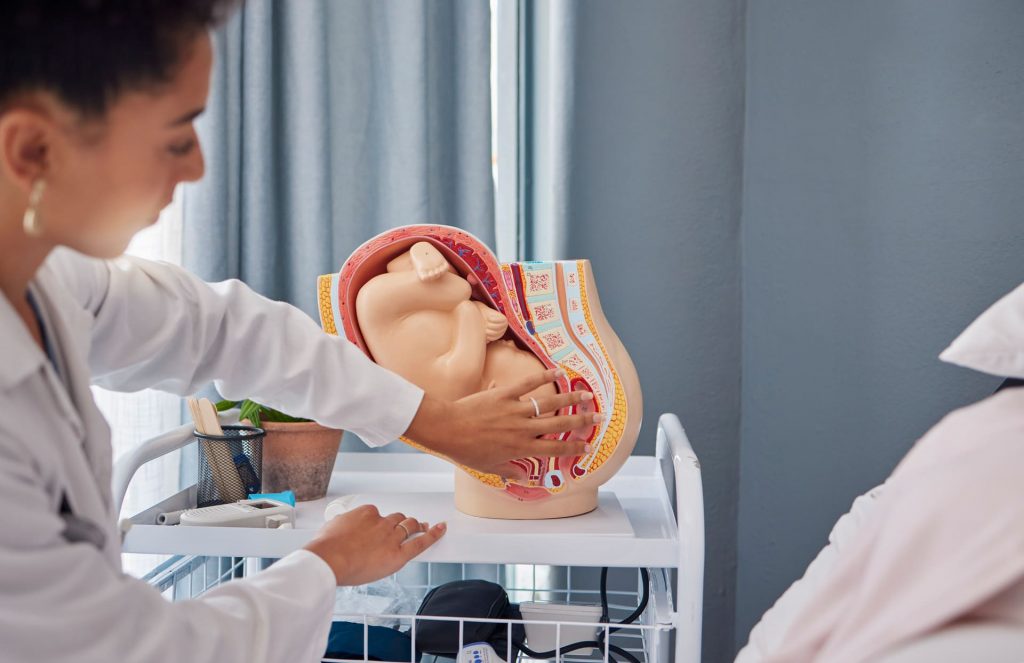
The Mini IVF method, also known as mini IVF, is a gentler and more targeted version of classic IVF. Instead of trying to get a bunch of eggs, we focus on picking a few high-quality ones, which lowers the risk of ovarian hyperstimulation syndrome (OHSS) and keeps the overall cost of treatment down. During a mini cycle, a lower dose of medication is administered, with the aim of producing 3-5 eggs, as opposed to the 10-15 produced in a conventional cycle. This approach reduces the number of injections and discomfort for the woman, offering a more natural, simplified and economical process. Mini IVF is not just an alternative; it is a conscious choice for women who want less medication while maintaining high success rates.
The process begins on the 2nd day of the period, when the woman takes oral medication to mildly stimulate the ovaries. Letrozole is usually chosen, or in some cases clomiphene citrate, and the duration of administration is 5 days. At this stage, the aim is to activate the body gently and naturally, without overloading it with high-dose medication regimens.
From the 6th day of the cycle, a low dose of injectable gonadotropins (usually up to 150 units per day) is added. This mild boost helps the follicles mature in a controlled and safe manner. In some cases, doctors choose to start with injections alone, without any oral medication, depending on the woman's clinical picture.
During stimulation, a pharmaceutical antagonist (GnRH antagonist) is added to prevent premature ovulation. This ensures that the follicles reach the appropriate level of maturity without losing timing. This stage allows for better control of the ovarian response and offers greater safety in the process.
Throughout the cycle, the patient is monitored with ultrasound scans and blood tests. The doctor checks the size of the follicles, hormone levels (such as oestradiol and LH) and adjusts the medication accordingly. Monitoring is just as careful as with a classic IVF cycle, with safety and effectiveness being the main goals.
Once the follicles have reached the desired size, a single injection of chorionic gonadotropin (hCG) is administered to complete maturation. Egg retrieval is scheduled 34–36 hours later, under mild sedation. The procedure is short, painless and performed using a vaginal ultrasound, in a completely safe environment.
On the same day as egg retrieval, sperm is collected and the fertilisation process begins. This can be done either by conventional IVF or ICSI (intracytoplasmic sperm injection), depending on the couple's needs. The fertilised eggs are monitored daily by the embryologist in a specially designed environment.
Embryo transfer takes place either on the 3rd or 5th day after egg retrieval, depending on the development of the embryos. Since mini IVF collects few but high-quality eggs, there is less chance of having extra embryos to freeze. The process is simple, painless, and done without anaesthesia.
Mini IVF is not for all women, but it may be an ideal option for certain groups of candidates, depending on their medical needs, personal preferences and treatment goals.
Candidates for Mini IVF:
Young women with a good prognosis
Women under 35 with tubal infertility and normal ovarian function may benefit from this gentler approach.
Women who avoid multiple medications
Those who want to reduce the medication burden but at the same time increase the chances of success compared to a completely natural cycle.
Women with polycystic ovaries
Mini IVF reduces the risk of ovarian hyperstimulation, which is particularly important for patients with PCOS. Although there are other protocols that offer protection, Mini IVF is an excellent choice.
Women with low ovarian reserve
The main indication for Mini IVF today is in women with a reduced number of available eggs. Even with high doses of medication, these women do not respond adequately to conventional stimulation.
Women seeking a more economical solution
Reduced use of medication means lower treatment costs, making Mini IVF more affordable.
Those who want control over the number of embryos
Mini IVF produces only the eggs needed for one embryo transfer. This means that there are no surplus embryos for freezing, donation or destruction — something important for women with certain values.
What to know before you choose
Although Mini IVF offers multiple benefits, it is not suitable for all cases.
According to a study (AJOG, 2016), birth rates are 49% in Mini IVF cycles, compared to 63% in conventional IVF.
The number of eggs collected significantly affects success, with 15–25 eggs giving the best chances (Fertility & Sterility, 2017).
Cost of Mini IVF in Greece
The cost of Mini IVF in Greece is significantly lower than conventional IVF, making it a more affordable option for many couples. The main reason is the limited use of medication, which usually accounts for a large part of the total cost of an IVF cycle. Instead of intensive drug stimulation, Mini IVF uses mild doses or only oral medication, drastically reducing costs.
A Mini IVF cycle in Greece can cost 30% to 50% less than a traditional IVF cycle, depending on the clinic, the tests required and the fertilisation options. Although success rates are slightly lower, the financial benefit can be decisive, especially for women with low ovarian reserve or those who need repeated attempts.
Natural / Mini IVF Frequently Asked Questions about Mini IVF
What are the success rates of Mini IVF?
Mini IVF has lower success rates than conventional IVF, mainly due to the smaller number of eggs collected. According to a study (AJOG, 2016), the success rate is around 49% per cycle, compared to 63% for conventional IVF. However, for women with low ovarian reserve or previous failed attempts, Mini IVF is often the most reasonable and safe solution.
Is it suitable for women over 40?
Mini IVF can be used in women over 40, especially if they have low ovarian reserve, where conventional stimulation does not offer any additional benefits. In these cases, it does not make sense to use high doses of medication, as the number of eggs collected does not increase significantly. However, it is important to assess each case individually by a fertility specialist.
Is it more economical than conventional IVF?
Yes. Mini IVF is significantly more economical, as it involves less medication and sometimes fewer tests and visits. The total cost can be reduced by up to 50%, making it ideal for couples on a limited budget or for women who need multiple attempts.
100% genuine, public Google reviews. Because every successful IVF story begins with honesty and trust.
Why choose FertUlity?
Because here, IVF is not just a medical procedure. It is a personal matter.
At FertUlity, we believe that every couple deserves to feel secure, respected and hopeful. We combine expertise in reproductive medicine, modern IVF techniques and a human approach that makes all the difference.
Our treating physicians, Dr. Maria Oikonomou and Dr. Makis Papadopoulos, are officially specialised in infertility and gynaecological endocrinology, offering personalised protocols for each case. We collaborate with leading units, such as the Institute of Life and the IAMA Clinic, utilising cutting-edge technology, with transparent prices, high success rates and a holistic approach.
We collaborate with leading units, such as the Institute of Life and the IAMA Clinic, utilising cutting-edge technology, with transparent prices, high success rates and holistic support throughout your journey.
FertUlity means reliability, expertise and human interest. Because life begins with the right choice.