Fertulity IVF
Fertulity IVF

MACS: Magnetic Sperm Separation for Improved Fertility

The MACS method (Magnetic-Activated Cell Sorting) is a specialized sperm selection technique used in assisted reproduction treatments. Through an advanced process of magnetic separation, spermatozoa showing signs of cellular apoptosis – meaning those programmed to die without achieving fertilization – are removed. Instead, only the healthiest and most functional spermatozoa are selected, with excellent morphology and intact genetic material. This biological "cleansing" of the semen sample enables laboratory teams to significantly increase the chances of successful fertilization and embryo implantation. Therefore, MACS is not merely a supplementary technique but a decisive step for the qualitative enhancement of the in vitro fertilization (IVF) process, especially in cases where male sperm issues are identified or previous attempts have failed.At Fertulity, the MACS technique is applied under strict quality standards and absolute scientific precision, with the aim of maximizing the chances of achieving pregnancy in the most natural and safe way.

What is the MACS Method?

MACS (Magnetic Activated Cell Sorting) is a specialized immunomagnetic technique that allows the selection of spermatozoa that do not show signs of cellular damage or apoptosis – the natural process in which a cell undergoes programmed death. Spermatozoa rejected through this process are those that do not maintain intact DNA and therefore have limited fertilization capacity. On the contrary, the MACS technique allows the isolation of a population of high-quality spermatozoa, with complete genetic material and stable cellular structure. This selective process significantly enhances the effectiveness of in vitro fertilization, as only the healthiest and most capable cells are used in the lab.

The importance of sperm quality in pregnancy success

Book A Consultation
Sperm quality is a decisive factor in achieving pregnancy, as it affects both the fertilization process itself and the subsequent embryo quality. Even when there are satisfactory values in basic sperm analysis parameters (e.g., count or motility), the presence of apoptotic sperm in the sample can undermine the final outcome of the attempt. MACS addresses exactly this issue: it identifies and removes spermatozoa carrying apoptosis markers on their cell membranes. Through the immunomagnetic process, the sample is cleansed, leaving only the fraction that is free from such damage, thus offering a genetically superior substrate for fertilization.

In Which Cases is MACS Applied

The MACS technique can be applied to any type of patient; however, its use is mainly indicated in specific cases where sperm quality appears to be a limiting factor for achieving pregnancy or for the progress of embryonic development. The targeted removal of spermatozoa with a higher likelihood of apoptosis makes MACS a valuable tool for improving outcomes in IVF cycles.

Use in intrauterine insemination treatments

MACS can also be applied to patients undergoing intrauterine insemination treatment. Although this assisted reproduction method is considered less invasive than IVF, sperm quality still plays a crucial role in its success. Through MACS, fertilization potential is enhanced, allowing the use of an optimized sample with sperm of high biological value.

Patients with high sperm DNA fragmentation rates

The presence of spermatozoa with fragmented DNA is one of the most critical markers of male infertility. Even in cases where conventional sperm analysis parameters appear normal, a high degree of DNA fragmentation can reduce the chances of conception or lead to failed implantations. MACS is used for the selective removal of these cells, retaining only those with intact genetic material and therefore higher reproductive potential.

Recurrent miscarriages without a clear cause

In couples who have experienced recurrent miscarriages without a clearly identified cause, MACS is a preventive and supportive intervention. Since spermatozoa with DNA damage may contribute to early pregnancy loss, the use of MACS can help reduce this risk by ensuring that only spermatozoa with a biologically stable profile are selected for fertilization.

Patients with previous failed treatment or poor embryo quality

The MACS technique is also indicated in cases of patients who have undergone a previous IVF cycle without success or who have observed poor embryo quality, not attributed to egg problems. In such cases, the focus shifts to the male genetic material, and the application of MACS acts as a targeted effort to optimize sperm, aiming to increase the likelihood of creating viable, high-quality embryos.
Have you experienced failures or unexplained miscarriages?
MACS may be the critical step that makes the difference. Take a targeted restart today. Request a personal evaluation from our doctors
Speak with an expert

Benefits of the MACS Method

The MACS® technique is a targeted improvement in sperm selection processes, offering multiple benefits in terms of fertilization, embryo quality, and the final outcome of the conception attempt.

Increased number of fertilized eggs

Thanks to MACS’s ability to isolate only healthy spermatozoa without signs of cellular apoptosis, the likelihood of each egg being successfully fertilized increases. Using cells that maintain their biological integrity leads to more effective and stable fertilization, which is a critical first step toward creating a viable embryo.

Greater number of embryos for cultivation

The qualitative superiority of the MACS-processed sample results in significantly improved embryogenesis. The fact that the genetic material comes from spermatozoa without damage contributes to the creation of more embryos, increasing the couple’s options both for same-cycle transfer and for cryopreservation for future use.

Better embryo development

Beyond increasing the number of embryos, MACS also significantly contributes to improving their quality. Embryos derived from healthy spermatozoa are more likely to reach advanced developmental stages, which is extremely important for implantation success. This ultimately translates into higher chances for a positive outcome, without the need for repeated cycles.

How MACS is Applied at Fertulity

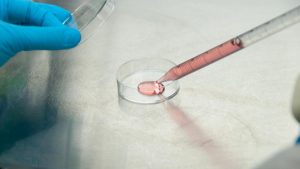
MACS application at Fertulity is carried out with a high level of laboratory specialization and in accordance with the strictest safety and accuracy standards. The process is based on the use of biodegradable magnetic microparticles linked to specific antibodies designed to recognize spermatozoa with signs of apoptosis.

Detection and retention of harmful cells

First, the semen sample is prepared and placed in a special column under a magnetic field. There, spermatozoa with apoptotic characteristics, i.e., signs of cellular damage, are recognized through their binding to the antibodies and retained on the column walls. This selective binding allows for the removal of cells that lack the biological capability to fertilize.

Selection of the healthy sperm fraction

The final sample collected at the bottom of the column contains only spermatozoa without signs of apoptosis, with excellent physiological characteristics. This qualitatively enhanced sample is now ready to be used in any assisted reproduction treatment – whether intrauterine insemination or ICSI – with clearly increased chances of success.

Specialized application by the Fertulity team

At Fertulity, the MACS technique is exclusively applied by experienced embryologists and laboratory specialists, under fully controlled conditions and with the most advanced technological means. Each sample is evaluated individually, and the decision to apply MACS is based on careful medical analysis, ensuring maximum effectiveness for each couple.

Frequently asked questions about MACS IVF

How long does the MACS process take in the lab?

The separation process using MACS is performed on the same day as sperm collection and lasts about 60–90 minutes. It is part of the overall laboratory preparation for the IVF or insemination cycle.

Is MACS suitable for every semen sample?

Not necessarily. Suitability depends on the overall quality of the sample, sperm count, and the presence or absence of apoptosis markers. The decision is always made after personalized assessment by our scientific team.

Are there any side effects or risks to the genetic material?

No. MACS is applied exclusively to sperm and does not affect the DNA of the spermatozoa or the health of the eggs. No chemicals or radiation are used – the process is based on biologically compatible, completely safe materials.

Does MACS replace other techniques like ICSI?

No. MACS does not replace ICSI or other micromanipulation techniques; it works as a complementary method, improving the quality of the sperm used. The final decision is made by the attending physician based on the couple’s history.

Is the MACS technique available in every IVF cycle?

The technique can be included in any cycle, as long as specific sperm quality criteria are met. At Fertulity, we evaluate each case individually to propose the appropriate timing for its application.

Our Doctors

In an era where fertility requires knowledge, care, and substantial guidance, FertUlity is not an impersonal clinic. It is two people who look you in the eye and accompany you step by step on the journey you dream of.

Dr. Maria Oikonomou Obstetrician – Gynecologist

See Full CV

Dr. Chrysostomos (Makis) Papadopoulos Obstetrician – Gynecologist, MD, PhDc, MIC I

See Full CV

The First Step Starts Now

You don’t need to have all the answers to begin.
All it takes is one first step, and a team that truly listens.
Book Your Consultation

FertulityThrough the Words of Parents

100% genuine, public Google reviews.
Because every fertility journey begins with honesty and trust.

Why choose FertUlity?

Because every fertility journey deserves the right support.

At FertUlity, we provide science-based fertility care with a human approach.
We support every path, from fertility assessment and preservation to modern assisted reproduction.

Ready for the next step?

Appointment Form
crossmenu